Short answer: how to increase Airbnb occupancy rate comes down to five things you control. Your price, your minimum stay rules, how much of your calendar is actually open, how fast you reply, and how good your listing looks in a grid of forty other listings. Everything else is noise.
Most owners we talk to think occupancy is a demand problem. It almost never is. The island is full. The flights are booked. The guests are out there. They are just booking the villa next door because that listing said yes to a four night stay and yours said no.
Here is the practical version, in the order we would fix it.
First, know your actual number
Occupancy rate is booked nights divided by available nights. If your calendar was open 25 nights last month and you sold 15, that is 60 percent.
Two traps here. First, if you block half the month, your occupancy rate looks great and your bank account does not. Second, most owners compare themselves to a national average that has nothing to do with their market. A two bedroom villa on St. John in February plays a completely different game than a condo in Tulsa.
We wrote a full breakdown of what counts as a good Airbnb occupancy rate, and a look at the cities with the highest Airbnb occupancy rates if you want a benchmark that is closer to reality. Pull your own last twelve months first. You need a baseline before you start changing things.
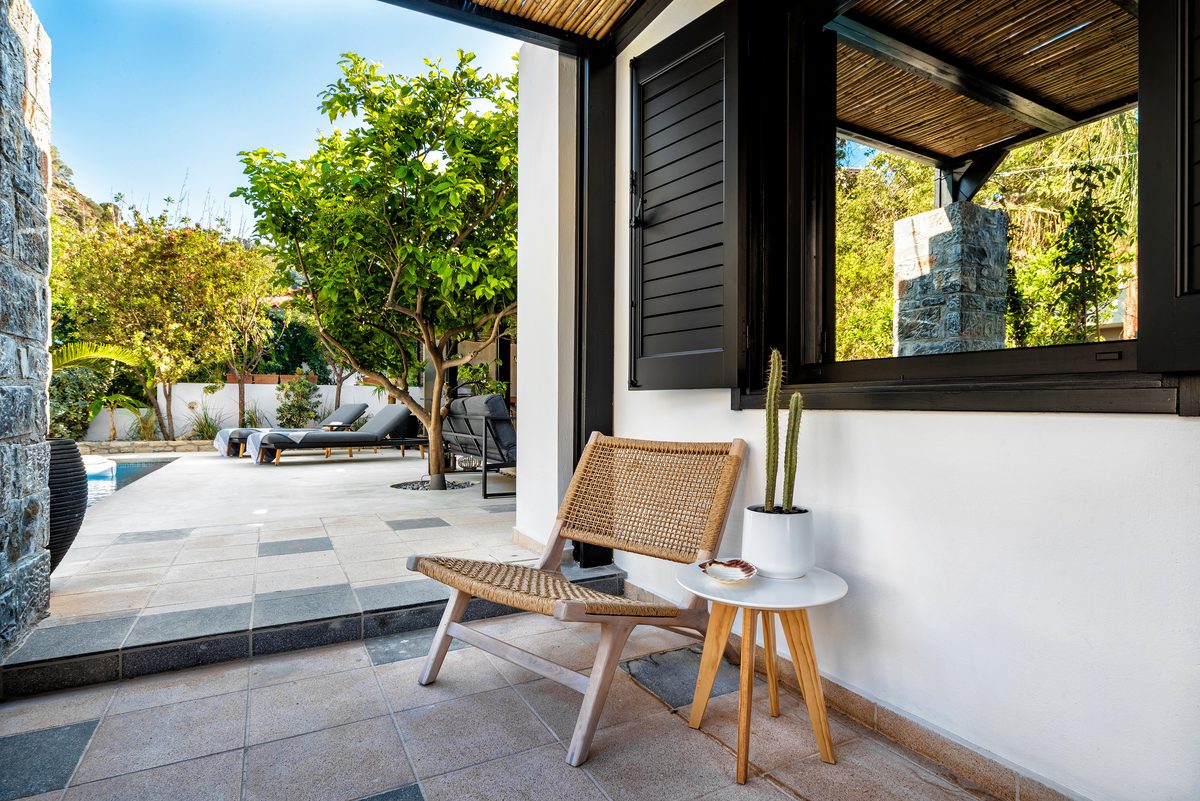
How to increase Airbnb occupancy rate: the seven levers
These are ranked by how much they move the number, not by how easy they are.
1. Price for the calendar, not for the year
A flat nightly rate across twelve months is the single most common reason a listing sits empty. Caribbean demand is not flat. December through April is a different business than September.
Airbnb’s own guidance is blunt about this. Price has a large impact on where you show up, and adjusting price or offering discounts is one of the most direct ways to change how your listing performs in search. That is straight from Airbnb’s explanation of how search results work.
You have two options. Turn on Airbnb Smart Pricing with a floor you can actually live with, or price the calendar yourself in blocks. Smart Pricing is free and it is tuned to fill nights, which means in a strong week it will often price you below what the market would have paid. Set a real minimum. Then override peak weeks by hand.
2. Loosen your minimum stay in the shoulder season
This is the fastest win available to most owners and it costs nothing.
A seven night minimum in high season protects your peak weeks from getting chopped into unbookable fragments. That same seven night minimum in late September is why your calendar is empty. Airbnb lets you set minimum nights per day of week and per date range, so you can keep the long stay rule for Christmas and drop to three nights for October.
Run the math on a single orphan gap. A three night hole between two bookings is worth more filled at a discount than left open at full rate.
3. Open more of the calendar
Availability is a ranking input, not just an inventory question. The more nights you are bookable, the more searches you are eligible for. If you are personally blocking two weeks a year for family and another three for maintenance, fine. If you are blocking dates because you have not gotten around to updating the calendar, you are paying for that in bookings.
4. Fix the first photo
Guests scan a grid. Your first image is doing almost all the work. Airbnb weights listing quality heavily, and a photo that does not make someone stop scrolling means nothing downstream matters.
Lead with the thing that makes your property different. A plunge pool at golden hour. The view from the deck. A room that looks like someone designed it. Not the parking area, not a wide shot of an empty white bedroom. We go deeper on this in our guide to Airbnb listing optimization.
5. Answer fast
Response time is tracked to the minute and it feeds both your ranking and your conversion. An inquiry that sits for six hours is usually a booking that went somewhere else. Set up notifications on your phone. If you cannot commit to fast replies, turn on Instant Book and let the calendar do the work.
6. Add the amenities people filter for
Guests filter before they browse. Air conditioning, wifi with a real speed number, parking, a washer, a pool, pet friendly. Every filter you fail is a search you never appeared in. Some of these are a purchase. Some of them are just a checkbox you never ticked.
7. Chase reviews on purpose
Review count and recency both matter. A property with 60 reviews outranks an identical property with 6. Ask every guest, at the right moment, which is the morning of checkout while they are still happy about the trip. Automate the message.
The occupancy trap nobody warns you about
Here is the part most advice skips. Occupancy is not the goal. Profit is.
You can hit 95 percent occupancy tomorrow by dropping your rate 40 percent. You will work harder, burn through more linens and cleaning turns, and take home less. The number that matters is RevPAR, or revenue per available night. Nightly rate multiplied by occupancy. Optimize that.
And then there is the fee problem. Every night you sell through Airbnb, the platform takes its cut off the top. On a villa doing 180 nights a year, that adds up to a number most owners have never actually calculated. We built a free OTA commission calculator so you can see what your platform fees cost you in a year. Most owners find the total uncomfortable.
The fix is not leaving Airbnb. Airbnb is a great top of funnel. The fix is converting the guests it sends you into repeat guests who book you directly the second time. That is what a direct booking website is for, and it is why we tell owners to treat their guest email list as the real asset. More on the mechanics in how to avoid Airbnb fees as a host.
Low season is a pricing problem, not a demand problem
In the Virgin Islands, most owners write off September and October. Some of that is real. Hurricane season is hurricane season. But a lot of those empty nights are self inflicted.
Three things work in the slow months. Drop your minimum stay. Price aggressively but hold a floor so you are not renting below your cleaning and utility cost. And go after the guests who travel off peak on purpose, which means remote workers, locals from neighboring islands, and repeat guests who already know the property and just want a cheap week. That last group only exists if you have their email address.
If you want more of the demand side, we also cover how to get more bookings on Airbnb and, for owners on other platforms, how to get more bookings on Vrbo. Owners working a specific island can see what we do in each market on our where we work page.
A 30 day plan
Week one, pull your last twelve months of booked nights and calculate your real occupancy rate by month. Week two, rewrite your minimum stay rules by season and open every date you are not personally using. Week three, reshoot or reorder your photos and lead with your best one. Week four, set a seasonal price calendar with a floor you will not break, and turn on an automated review request.
That is it. No new software, no consultant, no rebrand. Most owners we run this with see the calendar tighten inside two booking cycles.
FAQ
What is a good Airbnb occupancy rate?
For a well run vacation rental in a leisure market, 60 to 75 percent annually is a healthy range. Beach and island markets skew higher in season and much lower in the slow months, so annual average is the honest way to look at it. Anything above 90 percent usually means you are priced too low.
Does Smart Pricing increase occupancy?
Usually yes, and that is exactly the risk. Smart Pricing is built to fill nights, which it does by lowering your rate. It works fine as a starting point for a new listing with no booking history. Once you have a year of data, set your own seasonal calendar and use Smart Pricing only inside a range you have chosen deliberately.
How long does it take to see occupancy improve?
Pricing and minimum stay changes show up fast, often inside two to three weeks, because they change which searches you appear in immediately. Photo and review improvements compound more slowly, over roughly one to two booking cycles. Give any single change 30 days before you judge it.
Want a second set of eyes on it?
We run a free Direct Booking Diagnostic for owners in the Caribbean and Riviera Maya. We look at your listing, your pricing pattern, your website, and where your guests are actually coming from, then tell you the two or three things we would change first. No pitch deck, no retainer conversation unless you ask for one.
Grab the free Direct Booking Diagnostic and we will take a look.