Short answer: how to price tours comes down to five numbers, and the competitor’s website is not one of them. Start with your true variable cost per seat, divide by a realistic load factor instead of a full boat, set a gross margin floor of 40% to 60%, add the OTA commission layer on top, then build seasonal tiers. Price once a year and you are already losing money.
Almost every operator we sit down with in St. Thomas, Tortola, and Playa del Carmen priced their signature tour the same way. They looked at three competitors, landed in the middle, and never touched it again. Meanwhile fuel moved, crew wages moved, insurance moved, and Viator kept taking its 25%. The rate card did not move once.
That is not a pricing strategy. That is a guess with three years of dust on it. Learning how to price tours properly takes an afternoon and usually pays for itself inside a month.
Here is the process we walk operators through, with real arithmetic you can run on a napkin tonight.
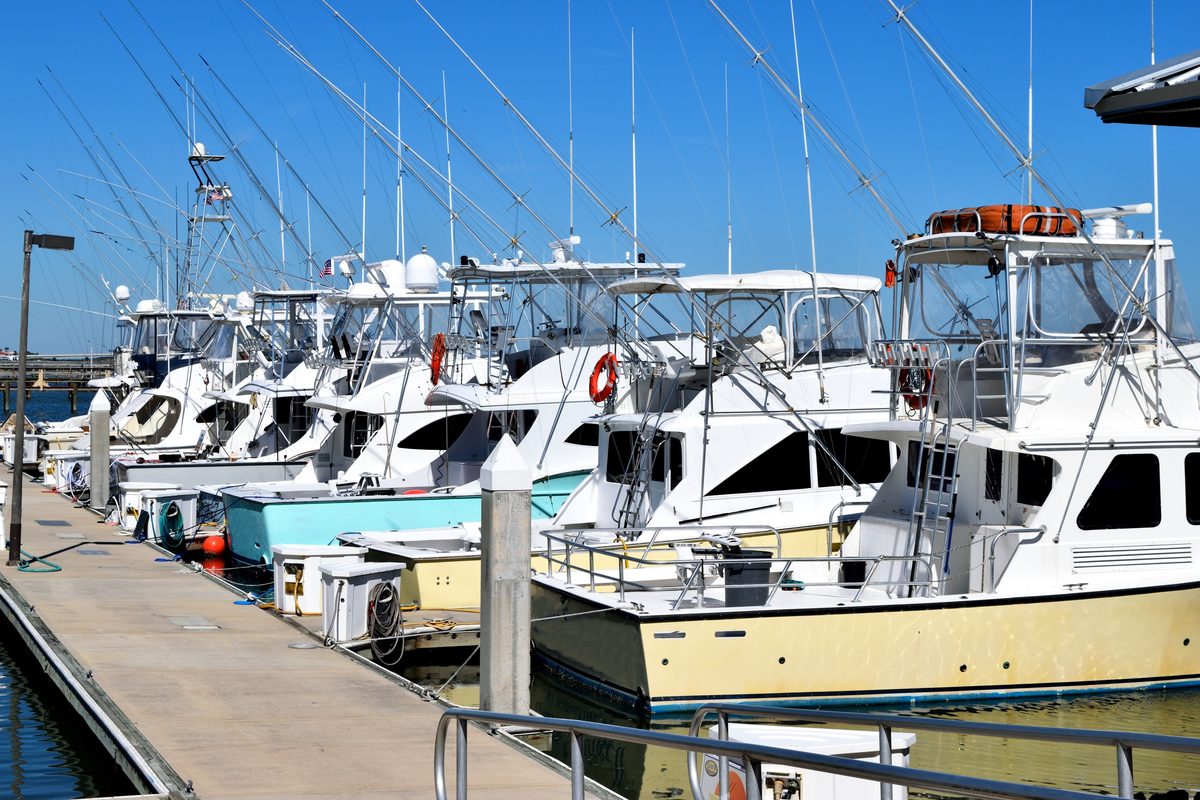
Step 1: Know your real cost per seat
Every useful answer to how to price tours starts in the same place, and it is not the market. It is your cost sheet. Split your costs into two buckets. Variable costs move with each departure or each guest. Fixed costs hit whether you run or not.
- Variable per departure: captain and crew wages, fuel, park and mooring fees, permits
- Variable per guest: drinks and snacks, gear wear, ground transfer, payment processing
- Fixed monthly: insurance, slip fees or storage, booking software, website, marketing, your own pay
Take a half-day snorkel charter with a six-guest cap:
- Captain and mate: $280 per departure
- Fuel: $120 per departure
- Mooring and park fees: $30 per departure
- Drinks, snacks, gear wear: $12 per guest
- Fixed overhead: $6,400 a month, spread across 44 departures, so $145 per departure
Load factor is the number that quietly kills margin
Nobody runs full. If you average four of six seats, your variable cost per departure is $430 plus $48 in per-guest items, so $478. That is roughly $120 per seat, not the $100 you get when you pretend every boat is packed. Every pricing model built on a full boat is fiction. Use your actual average from last season.
How to price tours in five steps
With cost per seat in hand, the rest is fast. This is the short version of how to price tours from scratch.
- Cost per seat at realistic load. Variable cost divided by your true average guest count.
- Set a gross margin floor. Healthy tour and activity operators run 40% to 60% gross margin on variable cost. Small-group and premium direct product can clear more.
- Check the anchor, then ignore most of it. Pull three to five comparable tours in your market. Compare inclusions, not just headline price. If theirs has no drinks, no gear, and a 20-person boat, it is not your comparison.
- Add the commission layer. Price so the rate still works after an OTA takes 20% to 30%, not before.
- Build seasonal tiers. One rate all year leaves money on the table in January and empty seats in October.
What a $30 change actually does
Same charter, four guests average, $478 variable, $145 fixed per departure.
- At $199 a seat: $796 revenue, $318 contribution, 40% gross margin, $173 profit per departure. Across 44 departures, about $7,600 a month.
- At $229 a seat: $916 revenue, $438 contribution, 48% gross margin, $293 profit per departure. Across 44 departures, about $12,900 a month.
A $30 bump, which almost no guest notices on a $200 experience, lifts monthly profit by roughly 70%. That is the whole game. Most operators are not underbooked, they are underpriced.
How to price tours for OTAs without handing over the margin
This is the part of how to price tours that most guides skip, and it is where the math gets uncomfortable. Viator commission commonly lands between 20% and 30% of the booking value, and Viator only charges on completed bookings, which is why the listing feels free until you run the numbers. Viator’s own supplier center spells out the pay-per-booking model. GetYourGuide sits in a similar band. We broke both down in detail in our posts on the Viator commission rate and GetYourGuide commission.
Run that same $229 seat through a 25% commission. You net $171.75. Four seats is $687 in revenue, minus $478 variable, minus $145 fixed, leaves $64 of profit per departure.
Direct: $293. Through the OTA: $64. The same seat, same fuel, same crew, and the direct booking is worth about four and a half times more.
We built a free OTA Commission Calculator so you can plug in your own rate and volume and see the annual number. It is usually the moment the conversation changes.
You cannot fix this by discounting your own site
Most OTA agreements include rate parity, so publishing a lower price on your own booking page is a contract problem, not a strategy. The move is to keep the rate identical and make direct worth more. Free photo package. Priority boarding. A drink on the return. Locals rate for residents with an ID, which is fair game because it is a different audience. Then get the booking path on your own site working, which is what a proper direct booking website is for, and read our playbook on how to reduce OTA commissions.
How to price tours by season
Anyone working out how to price tours in this region hits the same wall: the Caribbean and Riviera Maya calendar is not flat, so your rate card should not be either. In the USVI, mid-December through April carries the season. Riviera Maya adds a July and August family surge. September through November is thin in both markets, and plenty of operators simply close.
Three tiers beats one rate:
- Peak: 15% to 20% above your base. Demand is there. Charge for it.
- Base: your calculated rate at a normal load factor.
- Shoulder: up to 10% below base, with a hard floor at variable cost per seat plus a real margin. Never run a departure that loses money to look busy.
Shoulder season is also where locals, repeat guests, and an owned email list carry you, which is the same lesson we covered in tour operator marketing. FareHarbor’s Beneath the Surface 2026 report found revenue growing faster than bookings across several regions, driven by higher average ticket prices and stronger add-ons. Operators are getting paid more per guest, not just chasing more guests.
Five mistakes operators make when working out how to price tours
- Pricing off a full boat. Use your real load factor or the model lies to you.
- Forgetting your own wage. If your salary is not in fixed costs, you are subsidizing the business.
- Matching a competitor with different inclusions. You are not selling the same thing.
- Leaving the rate untouched for years. Reprice at least once a season. Insurance and fuel did not wait for you.
- No add-ons. Photos, transfers, gear upgrades, and combo tours lift the average ticket without touching your headline price. Arival’s pricing research makes the same point across the sector.
If you also rent villas or rooms alongside the tour operation, the same logic applies there, and we wrote it up in how to price your vacation rental. Charter operators should pair this with yacht charter marketing, and if you are shopping for a system that can actually handle tiered rates, start with the best tour operator software.
FAQ
How much should I raise my tour prices?
Test 10% to 15% on your strongest departure first, not your whole rate card. Watch conversion for three to four weeks. In our experience, the booking volume barely moves and the profit line moves a lot. If bookings drop more than 10%, you found your ceiling, and you can step back down.
Should my website price be lower than Viator or GetYourGuide?
No, and usually your contract says so. Keep the rate identical and stack value on the direct booking instead. Free photos, a locals rate, priority boarding, a better cancellation window. The guest picks direct because it is better, not because it is cheaper.
How often should I revisit how to price tours?
At minimum before every season, so twice a year in the Caribbean and Riviera Maya. Rebuild the cost sheet whenever crew pay, fuel, or insurance shifts more than about 10%. Booking windows keep stretching, so having next season’s rates live early matters more than it used to.
Where to start
Build the cost sheet first. Everything else is guessing. Once you know your real cost per seat and your true load factor, the rest of how to price tours is arithmetic, and the OTA math tends to make the direct booking case on its own.
If you want a second set of eyes on it, our free Direct Booking Diagnostic looks at your rates, your booking path, and what the platforms are costing you, and tells you where the money is leaking. No pitch deck. We work across the USVI, the wider Caribbean, and the Riviera Maya, and you can see the markets on our where we work page.