Short answer: the right hotel booking engine comparison comes down to four things, not forty. Does it plug into the system you already run, does it charge you per booking, does it look like your brand on a phone, and can a guest finish a reservation in under a minute. Everything else on a vendor feature grid is noise. Below is a plain comparison of the options small independent properties actually end up choosing, what each one really costs, and how to decide in an afternoon instead of a quarter.
What a booking engine actually is
A booking engine is the checkout on your own website. A guest picks dates, sees your real availability, pays, and gets a confirmation, all without ever touching Booking.com or Expedia. That is it. It is not your website, and it is not your property management system, though it has to talk to both.
The reason it matters is money. Booking.com charges a percentage on every reservation it sends you, and that commission applies to the room rate plus extras added at the time of booking, like cleaning fees and service charges, according to Booking.com’s own partner help pages. A booking engine on your site charges you a flat fee or nothing per reservation. On a 30-room property in high season that gap is not small. We built a free OTA Commission Calculator so you can put your own numbers in and see what a year of that gap looks like.
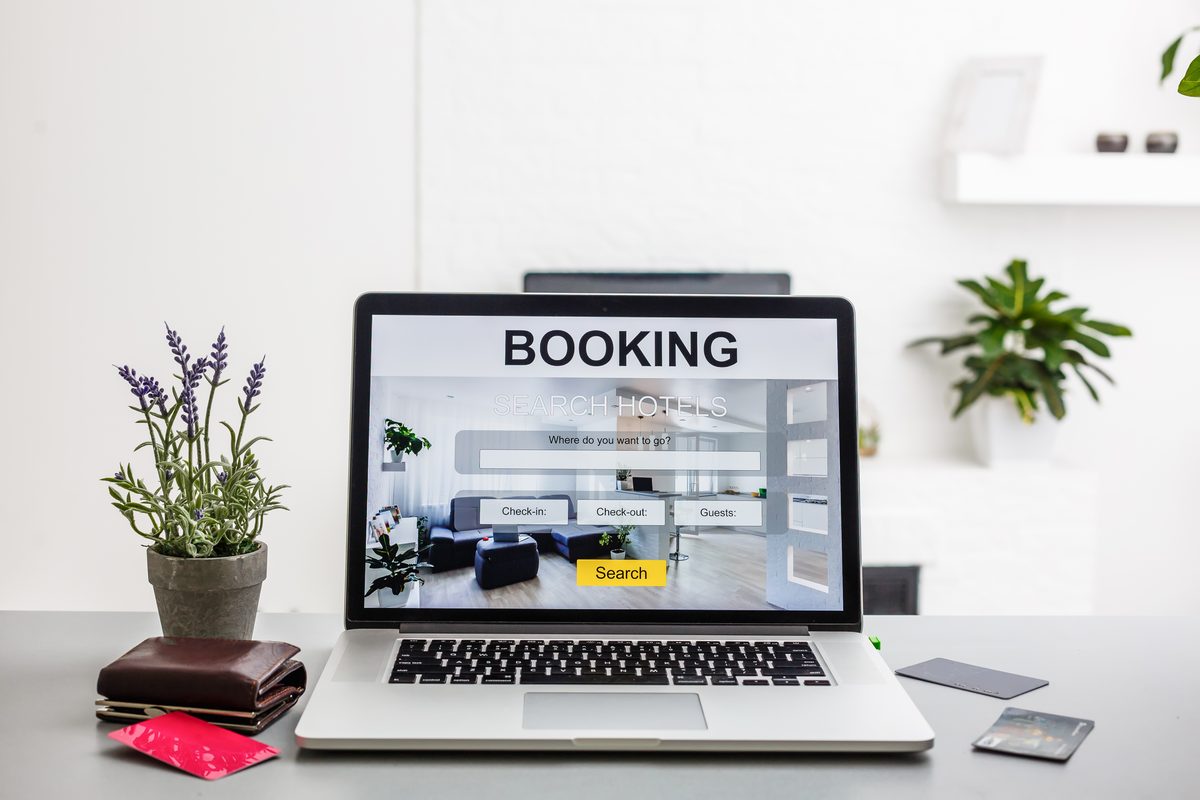
How to run a hotel booking engine comparison in one afternoon
Most owners stall here because every vendor page reads the same. Skip the feature lists. Run every option through these five questions and the field narrows fast.
- Does it connect to what you already run? If you are on a PMS, the booking engine that ships with it is almost always the right answer. Two systems that do not sync means you will oversell a room by August.
- How does it charge? Flat monthly, per booking, or a cut of revenue. Per-booking pricing is fine at low volume and painful at high volume. Do the math at your busiest month, not your slowest.
- Does it look like you on a phone? Most direct bookings for small Caribbean properties come in on mobile. If the engine loads in a boxy pop-up with someone else’s branding, guests bounce back to the OTA.
- How many clicks to book? Open the vendor’s demo on your own phone and count. Three screens is good. Six is a leak.
- Who answers when it breaks on a Saturday? Ask about support hours in your time zone before you sign, not after.
The options, compared
freetobook
The booking engine is free, permanently, with no commission and no annual fee. You pay only for add-ons. Their channel manager runs £1.50 per booking with a minimum of £9 a month and a cap of £99 a month, plus a one-off £49 connection fee per channel, and direct bookings do not count toward that, per freetobook’s published pricing. Best fit: guesthouses, B&Bs, and small inns under about 20 rooms that want to stop paying commission this month. Trade-off: the design is functional, not beautiful, and it is UK-centric.
Cloudbeds
The booking engine comes bundled with the PMS, and Cloudbeds does not add commission on reservations booked through it. In 2026 they replaced the old iframe with a native web component, which means the booking flow sits inside your page instead of on top of it and can be styled to match your site. Best fit: properties already running Cloudbeds, or anyone who wants one vendor for PMS, channel manager, and booking engine. Trade-off: pricing is quote-only, so you cannot compare it on a spreadsheet without a sales call.
SiteMinder
Priced by room count with no per-booking commission, a 14-day free trial, and no lock-in contract, per SiteMinder’s product page. It is the most widely connected option if you also sell through a lot of channels. Best fit: properties in the 20 to 100 room range that need serious distribution alongside direct. Trade-off: the booking engine sits on a higher tier, so the real monthly number is more than the entry price.
Little Hotelier
Built by SiteMinder specifically for B&Bs, guesthouses, and small properties, bundling booking engine, front desk, and channel manager. Best fit: owner-operators who want one login and do not want to configure anything. Trade-off: you grow out of it if you add properties.
Mews
Modern, well-designed, and built for properties that care about the whole guest journey. Pricing is quote-only. Best fit: design-led boutique hotels with 40-plus rooms and someone on staff who owns the tech. Trade-off: overkill and overpriced for an eight-room villa operation.
The one built into your website
If you run a small villa or a handful of units, a well-built booking form or a lightweight engine embedded straight into your site can outperform all of the above, because there is no third-party branding and no redirect. This is what we do on most direct booking websites we build. Best fit: 1 to 10 units. Trade-off: you need someone to build and maintain it.
What a hotel booking engine comparison usually misses
Two things get left off every comparison chart, and they decide whether this works.
The engine is not the problem, the traffic is. A perfect booking engine on a website nobody visits produces zero bookings. If you have not done the work on your site and your Google presence, the engine is not the first move. Read how to build a direct booking website before you shop for software.
Rate parity will bite you. Most OTA contracts stop you from publicly undercutting their price. You can still win, you just have to add value instead of cutting rate. Free airport transfer, late checkout, a bottle of local rum on arrival, a better cancellation window. Guests book direct for those. They also book direct because the OTA price is the same and they would rather deal with a human.
What we tell owners in the islands
Here is the pattern across the properties we work with in the US Virgin Islands, the BVI, and the Riviera Maya. Under 10 units, build the booking flow into the site. Between 10 and 25 units, freetobook or Little Hotelier gets you off commission fast and cheap. Above 25 units with real channel volume, run Cloudbeds or SiteMinder and connect everything properly. If you are already fighting a distribution mess, start with the channel manager comparison first, since the channel manager decision usually forces the booking engine decision.
One more thing that costs nothing. Put the booking widget above the fold on your homepage and on every room page. We have watched properties add 15 percent to direct volume just by moving the button. See where we work if you want the island-specific version of this.
FAQ
Do I still need a booking engine if I am on Airbnb and Booking.com?
Yes, and arguably more. Every OTA reservation is a guest you paid for. A booking engine is how you keep the second stay, the referral, and the shoulder-season booking without paying again. Compare your own numbers in the OTA Commission Calculator.
Is a free booking engine actually free?
Sometimes. freetobook’s direct booking engine genuinely carries no commission and no annual fee. But some free engines take a cut per reservation instead, and some require you to buy their channel manager or payment processing to be useful. Read the pricing page, not the headline.
How long does it take to switch booking engines?
For a small property, a week of real work and a few days of testing. The slow part is never the software. It is getting your rates, room types, and cancellation policies written down clearly for the first time. Budget for that.
Where to start
If you want a second opinion before you sign anything, we run a free Direct Booking Diagnostic. We look at your site, your booking flow, and your current commission load, then tell you plainly whether a new booking engine is the fix or a distraction. Grab one here.